The Future for You: Energy Costs, Climate Health, and Careers
By Priscilla Dyer and Tony Passino, February 26, 2026
In downtown Phoenix, the community came together to face a simple truth: climate change is already hitting our communities with extreme heat and rising bills. The good news is that when we act together, real solutions are possible.
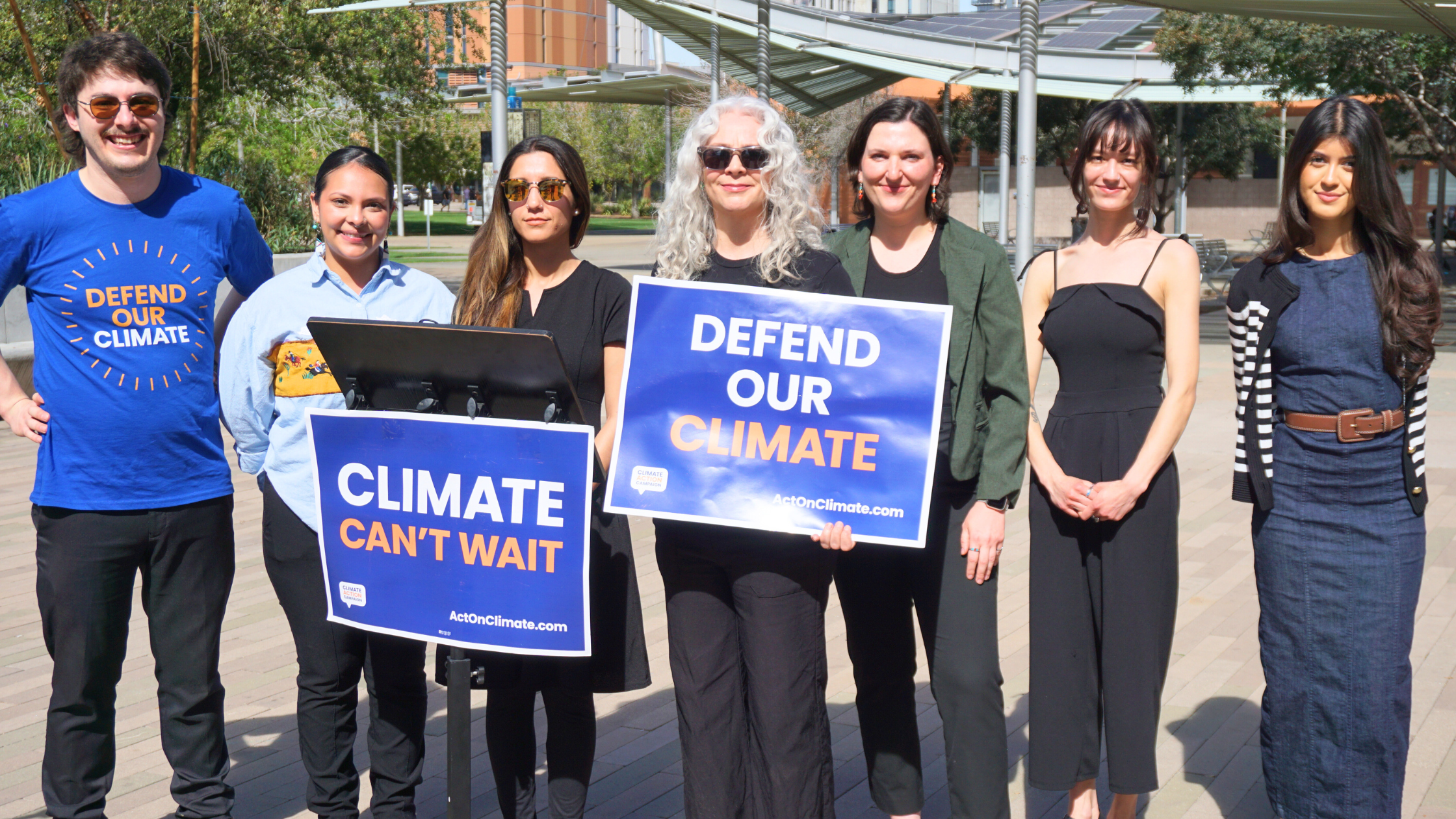
Pictured: Tony Passino, Claudia Klein, Sheril ‘Sherito’ Steinberg, Paloma Greenwald, Claire Michael, Ris Ruiz & Jazmin Moreno-Dominguez
It’s still winter, but it felt more like April than February as people gathered at Civic Space Park in downtown Phoenix. Advocates, organizers, and public health leaders came together with a clear understanding. Climate change in Arizona is not some distant threat. It is already shaping daily life!
The event, “The Future for You: Energy Costs, Climate, Health, and Careers”, brought together people from different generations and backgrounds. Hosted by Change the Chamber, Elders Climate Action, Arizona Interfaith Power and Light, and Poder Latinx, it was a chance to talk openly about extreme heat, rising utility bills, worker safety, and what can actually be done to address these issues.
Watch the event recording here.
Tony Passino, National Climate Fellow with Change the Chamber and Ph.D. Student started with the facts. “We know that 84 percent of Arizonans live in a community with unhealthy air, and Phoenix is one of the most polluted cities in the country,” he said. Climate change affects everyone, he added, but Native, Latino, low-income, and older communities carry the heaviest burden.
He acknowledged the fear many people feel about the future, but he also offered perspective. “This fear is not new for us,” Passino told the crowd. “Like springtime, new life is starting to grow beneath the surface. Our movement is growing.” The goal of the gathering wasn’t just to point out the crisis. It was to highlight solutions already taking shape across the state.
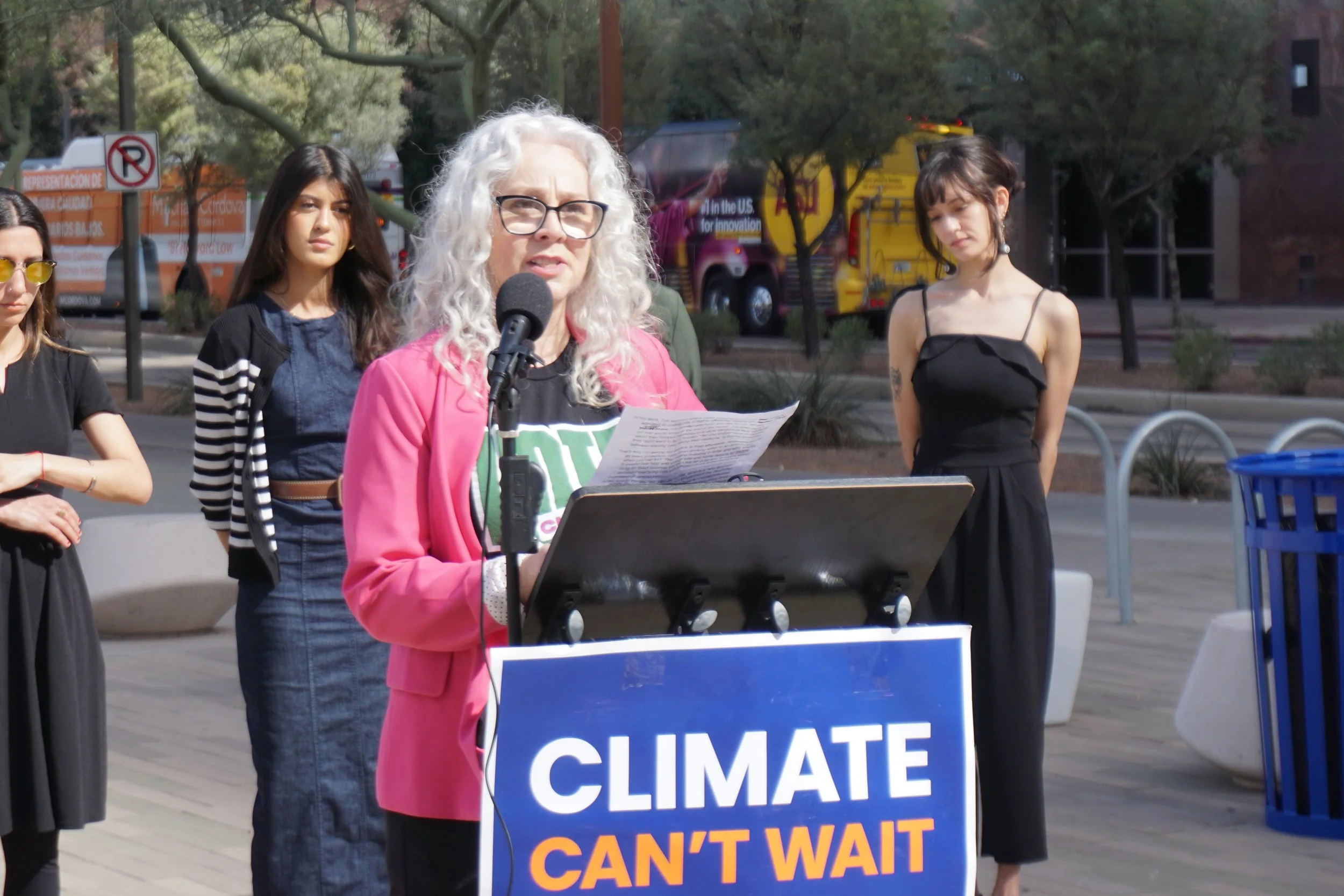
Paloma Greenwald, Elders Climate Action
Paloma Greenwald, Climate & Health Initiatives Manager for Elders Climate Action, made the stakes clear. “Last year in Maricopa County, over 600 of our neighbors died from heat,” she said. Many of those deaths happened indoors where air conditioners were broken, electricity had been shut off, or people were too afraid to turn it on because of the cost.
She has seen older adults ration oxygen, split medication, and sit in dark apartments to keep costs down. “No one should have to choose between their health, staying cool, taking medicine, or buying groceries,” Greenwald said. Affordable renewable energy, she added, should be treated as essential, like clean water or emergency care. “We need these solutions now.”
Claudia Klein, EcoPoder Organizer in AZ for Poder Latinx, shared her own experience. “I am not a homeowner. I work more than 50 hours a week. I am barely home,” she said. “And yet my utility bill in January was over $500.” She had not turned on the heater or air conditioner. The charge still came. If this seems extreme, just imagine what the utility bill might cost during the summer in Arizona.
For families already struggling to make ends meet, rising utility costs force impossible choices. Food, medicine, rent, or electricity. An eight percent or fourteen percent rate increase may not sound huge on paper, but for households living paycheck to paycheck, it can be crushing. Klein also highlighted that renters and low-income residents rarely have a voice in decisions that affect them. “Even when the system limits our choices, our voices still matter. So let’s use them.”
Sheril ‘Sherito’ Steinberg, Community Outreach Coordinator and Tribal Liaison with the Governor’s Office of Resiliency, emphasized the importance of community engagement and policy advocacy. “Our office works closely with tribal nations and local communities to ensure that energy solutions are equitable and accessible,” she explained. “We know that climate resilience isn’t just about infrastructure, it’s about empowering people, listening to their needs, and ensuring everyone’s voice is heard in the fight against climate change.”
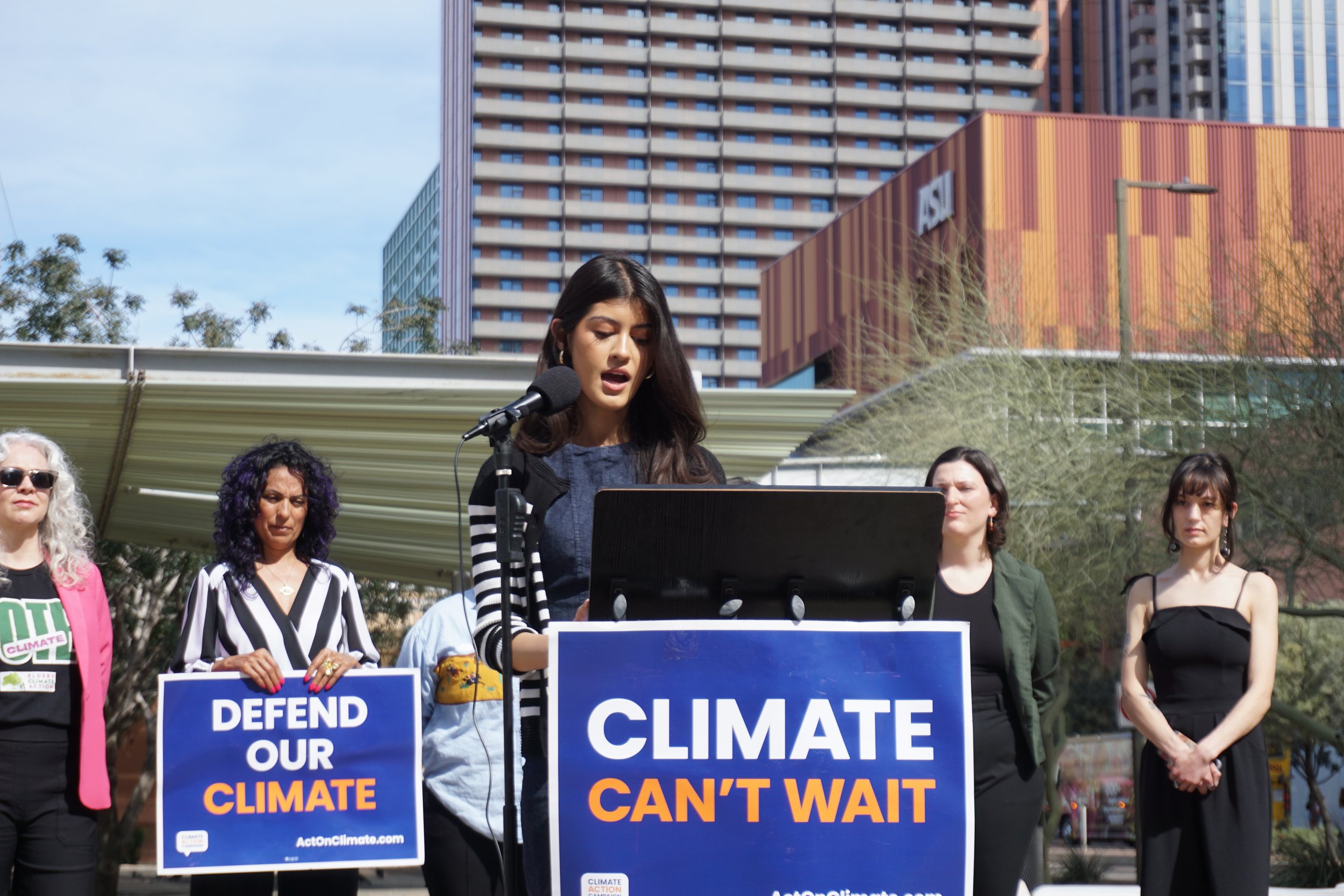
Jazmin Moreno-Dominguez, Agave Community Threads
Jazmin Moreno-Dominguez, Organizing Manager at Agave Community Threads, focused on workers. Arizona has some of the deadliest weather in the country, and the people most exposed are often the most vulnerable. “Arizona has no guaranteed protections for outdoor or indoor workers,” she said. “There is no guarantee of water, rest, or shade.”
She shared what farmworkers in Yuma have told her. Long days of twelve to sixteen hours, lunch eaten in the shadow of tractors, water carefully rationed, coworkers collapsing from heat exhaustion. “I have seen people drop dead,” one worker said. Moreno-Dominguez stressed that these are not isolated accidents. They are inevitable consequences in a system without enforceable heat protections. “Lives are on the line. My father’s life is at risk. And if we do nothing, we will not survive.”
We can do better to ensure there are protections in place for people like Jazmin’s father and others who face extreme heat.
Claire Michael, Director of Climate Equity from Wildfire AZ, added perspective. The average Arizona household spends about four percent of their income on electricity. Low-income families often spend more than twice that. Whether skipping meals, rationing medicine, or keeping their homes at unsafe temperatures, nearly half of residents experienced some form of energy insecurity in the past year.
Programs like LIHEAP and weatherization assistance can help, she said, but some energy-efficiency programs are at risk as rate cases move through the Arizona Corporation Commission. “You do not have to know everything to make a public comment,” Michael told the crowd. “Just share your story. Say what matters to you.”
Ris Ruiz, Community Organizer at Arizona Interfaith Power & Light, closed with a story about a marching band. What made it work was not one standout performer. It was coordination, trust, and teamwork. “The whole is greater than the sum of its parts.”
The same is true for climate action. “If everybody shows up at Corporation Commission meetings to advocate for clean energy and fair rates, it will make a bigger difference than one person alone,” Ruiz said. Individual actions matter not because they solve everything, but because they inspire others. “We lead. Policy follows.”
As the event ended, Passino thanked the speakers and the crowd. “Climate change is scary,” Ruiz had said earlier. “But we have each other.” That morning in downtown Phoenix, those words felt less like comfort and more like a plan.
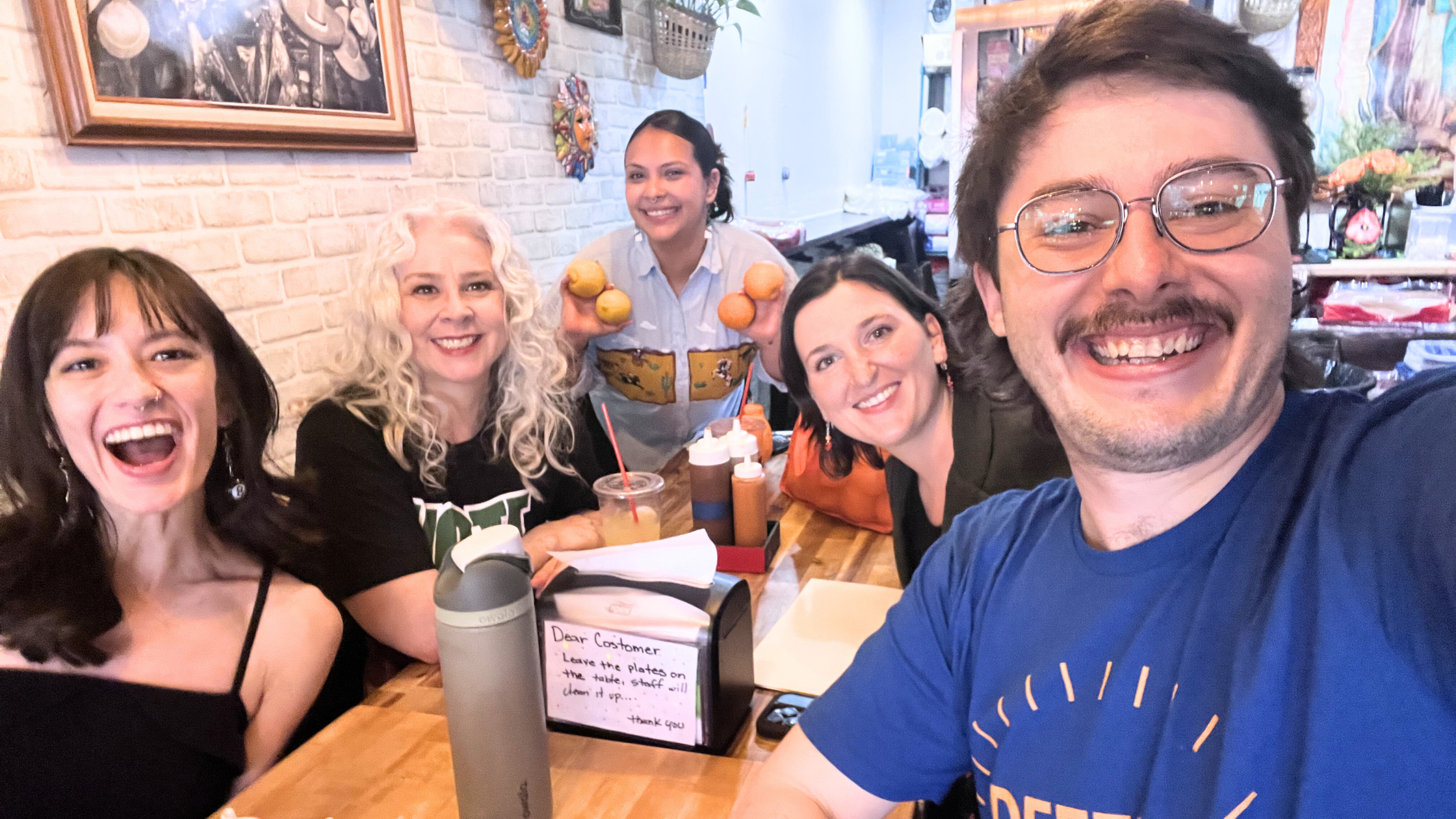
Pictured: Riz Ruiz, Paloma Greenwald, Claudia Klein, Claire Michael & Tony Passino sharing lunch after the event.
Take Action
If you were inspired by the content in this article and are looking for ways to contribute to a better, brighter future, you can take the actions below and consider getting involved in your local community or a national organization.
Sign these two petitions:
Change the Chamber is a nonpartisan coalition of young adults, 100+ student groups across the country, environmental justice and frontline community groups, and other allied organizations. To support our work, donate or join our efforts!