Resilience In Motion: Dr. Robert Bullard and the Long Road to Environmental Justice
By Siya O., February 27, 2026
Long before climate justice was mainstream, Robert D. Bullard was connecting the dots between race, pollution, and power. He has inspired generations to keep fighting for justice, and proven that change is possible when communities refuse to back down.
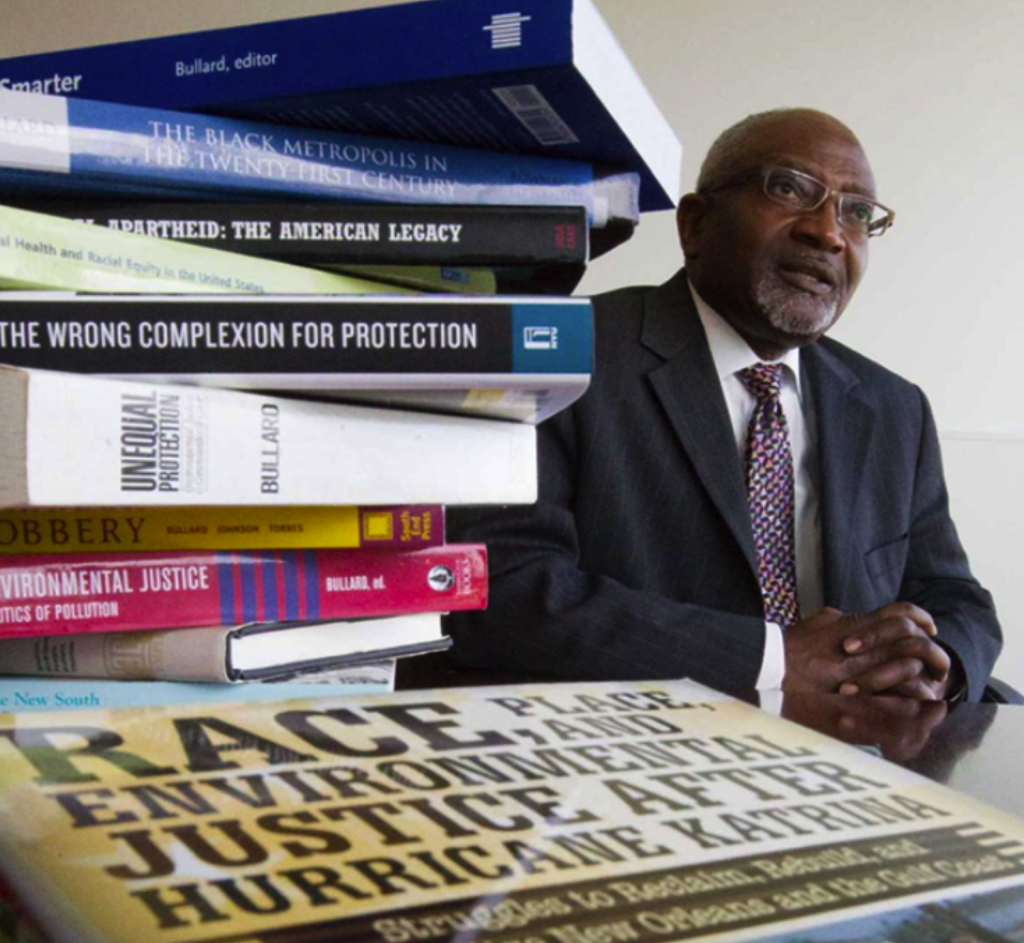
Source: Bullard Center
Every February, timelines fill with quotes, photos, and names of Black Americans from throughout history. There is remembering, reposting, and reflecting. Black History Month is a recognition of decades of history that isn’t finished, reflecting an ongoing movement shaped by people who continue showing up long after the headlines fade. And while that moment of looking back matters, one month cannot capture all the accomplishments and struggles. Stories, like history, cannot be constrained to a single month. Some stories continue unfolding in real time, shaped by people who have spent decades pushing for change even when progress feels slow.
Dr. Robert Bullard is one of those people. Often called the father of environmental justice, his work began in the late 1970s when he started documenting how pollution and hazardous facilities were disproportionately placed in Black communities. What began as research quickly grew into another wave of movement that connected civil rights, public health, and environmental protection in ways that had rarely been acknowledged before. Listening to him does not feel like a history lesson. It feels like stepping into a conversation that has been ongoing for generations.
“Our environmental climate justice movement was not birthed in government. It was not funded by federal dollars. It was birthed out of struggle. And it will continue to progress and move forward. We don't have a reverse on this bus.”
- Dr. Robert Bullard
During the Center for Climate and Environmental Justice Media (CEJM)’s “Bridging Communities with Hope: An Environmental Justice Conference for All,” hosted by UMass Boston last September, he explained that struggles don’t simply disappear after a victory is won. Instead, they return in new forms, adapting to new systems and new landscapes. “Because when we defeat a facility… they are like zombies. They keep coming back,” he said. The metaphor landed with honesty. When one version of injustice is challenged, and another appears elsewhere, asking communities to respond again, often with fewer resources and more fatigue. The systems behind injustice often shift rather than vanish. The idea stretches far beyond environmental justice. It reflects a broader truth about social change: progress is real, but it is rarely permanent. Systems evolve, challenges shift, and the work requires constant reinvention.
What makes Bullard’s perspective so powerful is not only the critique but the grounding sense of hope carried alongside it. He has emphasized the importance of celebrating victories without losing momentum. Resilience does not always appear loud or dramatic; sometimes it is simply the decision to keep showing up, even when the path forward feels uncertain.
He also reframed how the environment itself is understood. Rather than treating it as something distant or abstract, he described it as the spaces where people live, work, play, and worship. That framing moves environmental justice out of theory and into everyday life, linking our environment directly to community, culture, and health. His reflections on younger generations also stand out. After decades of advocacy, Bullard spoke about feeling energized by young people who are not yet convinced that change is impossible. Each generation inherits unfinished work, but also brings new imagination to it. The movement evolves not because challenges disappear, but because new voices step forward.
In many ways, Bullard’s journey mirrors the broader arc of changemaking itself. Progress moves in cycles, moments of breakthrough followed by moments of resistance. Yet through it all, science, storytelling, policy, and activism intersect, shaping a vision of justice that is both practical and deeply human. As conversations around equity, climate, and public health continue to grow, voices like Dr. Bullard’s offer something essential: not just critique, but continuity. His work shows that change is rarely a single victory or a single moment in time. It is an ongoing practice built on persistence, collaboration, and the courage to imagine better systems even when old ones refuse to fade quietly.
Stories like his feel timeless because they are confined to a particular month or moment. They live in classrooms, neighborhoods, and movements that continue to expand long after a speech ends. The legacy of changemakers like Dr. Bullard lies not only in what has been accomplished but in how their work continues to invite others to carry the story forward.
Connect With Dr. Bullard
If you are interested in staying connected to this work, the Bullard Center at Texas Southern University and the Deep South Center for Environmental Justice will host the 11th Annual HBCS Climate Change Conference in New Orleans from March 18-22, 2026, a gathering focused on climate justice, resilience, and community-driven solutions.
As Dr. Bullard reflects on the moment, “Our conference at this critical juncture in history embodies the spirit of Sankofa- a principle that encourages us to look back in order to move forward. Our HBCU centers, partnerships, networks, and consortia stand as pillars of strength from which we can build on and draw important lessons as we chart a course for the future.”
The Bullard Center will also host its inaugural gala, Ember to Flames: Inspiring Intergenerational Justice, on April 25, 2026, continuing its work to support community organizations, students, and research efforts advancing environmental and climate justice.
Change the Chamber is a nonpartisan coalition of young adults, 100+ student groups across the country, environmental justice and frontline community groups, and other allied organizations. To support our work, donate or join our efforts!