Same Forever Chemicals, New Location
By Erika Pietrzak and Siya O., June 7, 2026
A toxic factory shuts down in one country, only for similar operations to emerge somewhere else. When it comes to “forever chemicals,” contamination is not always stopped. Sometimes, it simply changes location.
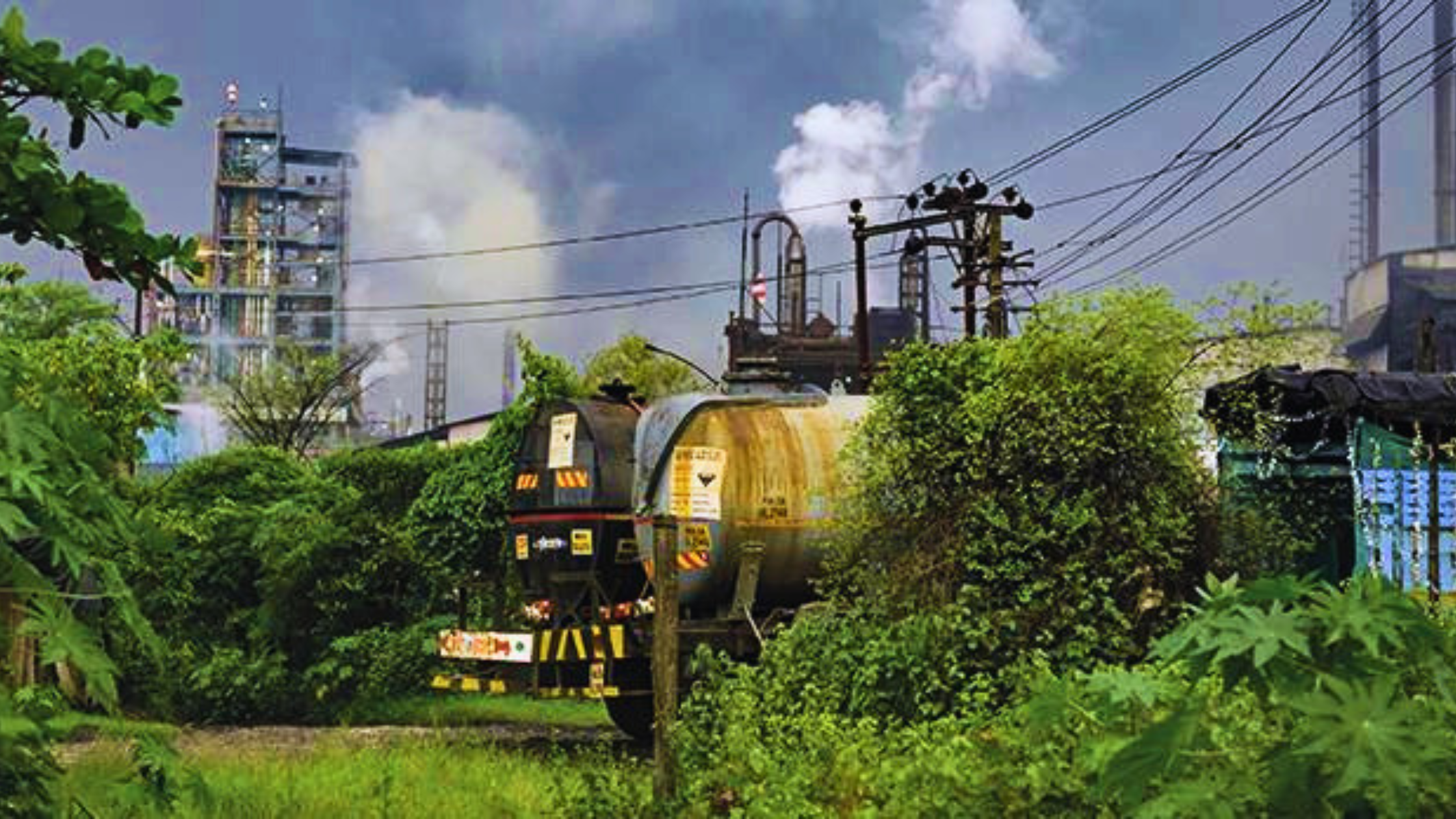
Source: JournalismFund Europe
Italy is home to some of Europe’s most breathtaking beauty and ecological diversity. Stunning views and coastlines are what come to mind for most Americans when they picture the stunning waters of Italy. However, beneath the surface, a threat is looming over the country’s marine ecosystems, waterways, and health: per- and polyfluoroalkyl or PFAS. Often referred to as forever chemicals, PFAS are common synthetic chemicals that do not break down, causing serious health impacts. Industries producing and using FAS in their products often recklessly contaminate nearby communities with the dangerous chemicals, risking the health and safety of both people and nature.
PFAS enters the body through contaminated water, food, and air. Unlike most chemicals, they do not break down- they don’t leave our bodies or environments. Instead, they accumulate throughout our bloodstreams and organs over the course of several years, often without visible symptoms. PFAS also accumulate in other organisms and waterway their potency as they travel up the food chain. The presence of PFAS in the body is linked to a series of serious health impacts–cancers, infertility, cardiac diseases, and low birth weights, to name some of the many. What makes PFAS particularly dangerous is the prolonged timeline between exposure and diagnosis–communities can be poisoned for years, even decades, before the impacts are realized.
One of the most notorious PFAS polluters in Italy is Miteni. Producing chemicals since 1965, “Miteni specialised in producing PFAS compounds, such as PFOA, GenX and C6O4, which are widely used in textiles, agrochemicals and pharmaceuticals.” In 2013, Italian authorities found Miteni responsible for much of the PFAS contamination in the Veneto region. As a result of this decision, the company became saddled with environmental legal problems. This pile-up of legal issues eventually led to the company declaring bankruptcy in 2018.
Miteni was forced to shut down in late 2025 “after contaminating the soil and water in an area inhabited by 350,000 people.” This contamination led to “alarmingly high levels of PFAS” found within the bloodstreams of local residents. One of these residents was Ilario Ermetti, a worker for Miteni who had one of the highest PFAS levels ever recorded in human blood. In 2025, Miteni executives were sentenced to a combined 141 years in prison. This historic decision “established criminal liability for large-scale PFAS contamination and the poisoning of water resourcesfor the first time in Europe.” The executives were found guilty, but the damage is far from done. The machinery was dismantled, then promptly loaded onto a ship heading east. When Europe declared PFAS Contamination a crime, the global market simply rerouted. Guilt, it turns out, does not travel with the cargo.
An Indian company named Laxmi Organic Industries had purchased the plant from Miteni and rebuilt the old Italian plant in India. It wasn’t just the materials that were shipped four thousand miles away, either. Antonio Nardone, the last CEO of Miteni, convicted and sentenced in Italy to over six years in prison for poisoning 350,000 people, was appointed to the board of Laxmi Organic’s European subsidiary. The same man. The same chemicals. A different country. According to one former mid-level manager, Nardone had taken several trips to India just months before Miteni went bankrupt. Further investigations showed that Laxmi ”was already planning to start producing fluorochemicals compatible with Miteni’s product list” in March 2018, despite not buying Miteni’s assets until June 2019. The company’s president, Harshvardhan Goenka, defended Nardone and Miteni, saying that they were “doing everything legally according to European standards.”
Located south of Mumbai in Lote Parshuram, Laxmi Organic Industries opened the plant in 2025 to produce the same PFAS for clients globally. India “lacks environmental regulations and monitoring of PFAS emissions,” which made conditions worse for local communities already burdened by decades of industrial pollution. Lote Parshuran is not just an industrial zone – it’s also an ecologically sensitive region in close proximity to a rural settlement. The area is home to fishing communities and farmers who depend on the Vashisthi River for both their water and livelihoods.
The community of Lote Parshuram was not consulted nor informed before the new PFAS plant came to town. And like the families in Veneto who used contaminated water for years without knowing, they may only learn the cost of this decision long after the damage is done. Worse, they may not even get justice for the harms inflicted on them.
In late 2025, an investigation was released by an international team of journalists that revealed the similarities in PFAS contamination between the Laxmi Organic Industries plant and the Miteni plant. The investigation also emphasized a larger global problem: “When regulations tighten in Europe, pollution is often not being solved, only relocated.” Without clearregulations, PFAS contamination may quickly ensue unchecked in India.
After the international investigation came to light, a member of the Legislative Assembly of Maharashtra, Rohit Rajendra Pawar, publicly accused Laxmi Organic Industries’ plant of using banned Italian equipment while emitting dangerous chemicals, demanding immediate closure and investigation of the facilities. Laxmi Organic Industries’ Minister Uday Samant denied that the plant produces PFAS, and promised proof of the company’s innocence. With no follow-up from Samant, local residents and activists conducted a protest outside the plant, demanding its closure and transparency. Online activists have mirrored these demands, calling the plant an example of “environmental colonialism — the export of toxic production from regulated regions to those with weaker oversight.” For locals, the plant is a significant worry. They fear the PFAS plant could become another disaster like the local failing wastewater treatment plant that’s been polluting the streams that provide water for entire villages nearby.
When a chemical is banned in Europe because it poisons people, how can the same chemical and the same equipment, running the same operations, be considered acceptable somewhere else? The answer is silence: the silence of communities that don’t yet know what is in their water, and the silence of corporations that are counting on exactly that. The people of Veneto waited decades for justice. The people of Lote Parshuram should not have to wait at all. Human life does not become less valuable because it is less visible. And the environment does not become less damaged because fewer people are watching.
Take Action
Sign this petition to call for transparency, stronger environmental protections, and preventive action against potential PFAS pollution before irreversible harm is done to communities, water, and future generations.
Change the Chamber is a nonpartisan coalition of young adults, 100+ student groups across the country, environmental justice and frontline community groups, and other allied organizations. To support our work, donate or join our efforts!