Building for Residents...or Building for Tourists?
By Darren Plummer II, March 19, 2026
The $100 billion surge for the 2026 World Cup is a stress test for the American grid. Is this a permanent investment in our future, or a high-priced "set" built to hide our transit failures from the world?
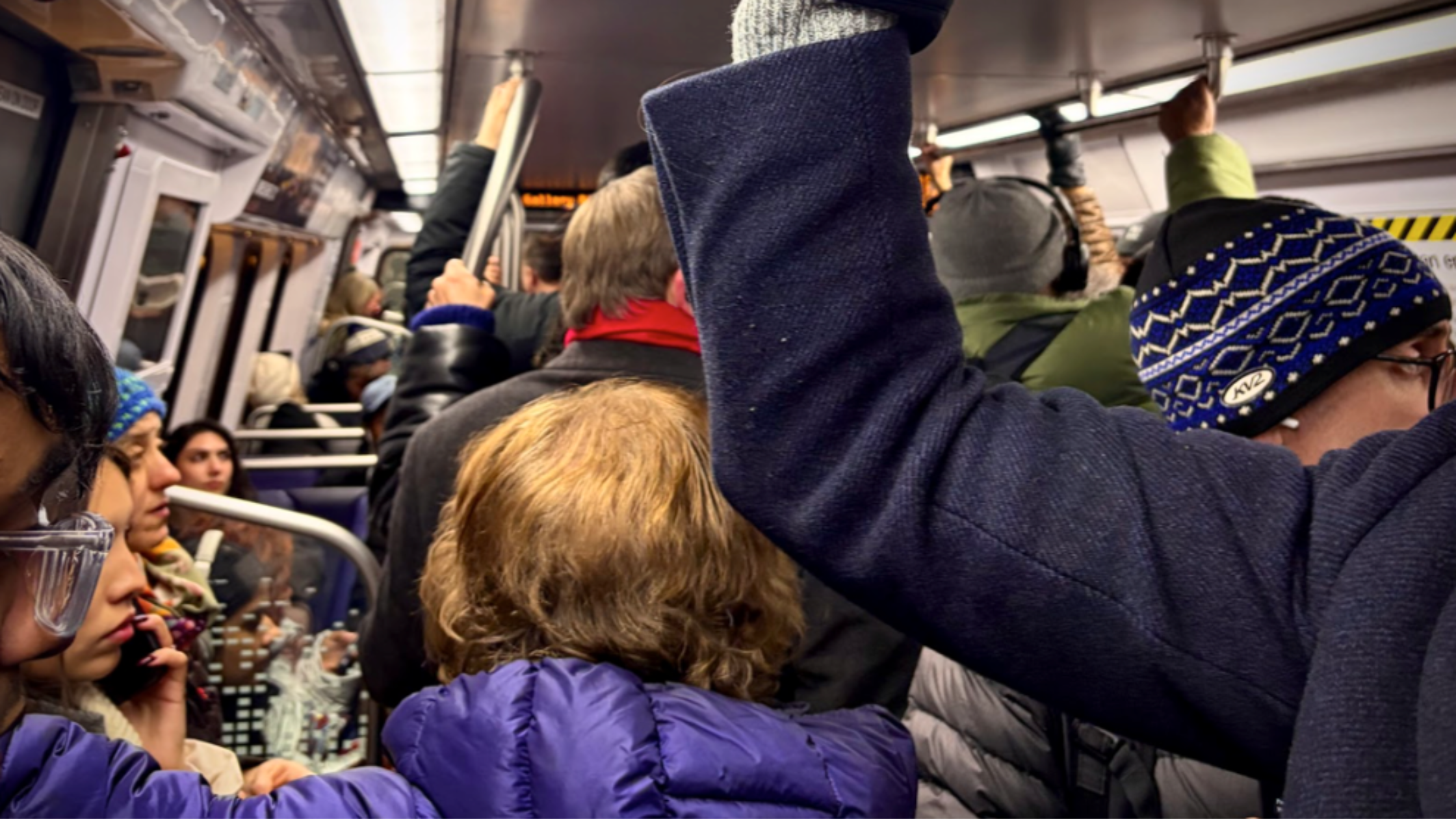
Rush hour on Red Line of the WMATA Metrorail in Downtown DC around 5:00 pm on Tuesday, February 24th
World Cup host cities like Seattle and Toronto are poised for logistical wins as they plan to accommodate the 2026 World Cup, while others like Dallas and Miami face a transportation nightmare. Although Washington D.C. is not hosting a World Cup match, the city is still preparing for a massive "Fan Fest" on the National Mall. While our Metro is often ranked as the best U.S. transit for rider experience, the current 10-week shutdown at Crystal City station indicates that even the best systems prioritize "Tourist Sets" over resident commutes.
The Logistical "Bandaid"
The $100.3 million doled out in the Consolidated Appropriations Act (H.R. 7148) for emergency infrastructure could have already been in place for everyday workers. Instead, it is a temporary patch to satisfy FIFA’s 90-minute stadium clearance mandates.
The contrast in spending between everyday infrastructure and the FIFA World Cup is staggering. While the Pentagon still receives record funding despite failing eight consecutive audits with trillions "missing," the government has classified the World Cup as a "National Special Security Event" (NSSE). This shifts even more funding into the $625 million FIFA World Cup Grant Program, where 94% of the money simply pays for officers to stand on street corners. It is a major bandaid that disappears the moment the trophy is hoisted. Derek Gali-Martinez, an Agricultural Specialist and National Climate Fellow who previously worked on the bill, claims it establishes no new regulatory requirements for emissions or climate action. By funding agencies without setting enforceable pollution limits or clean-energy mandates, the bill leaves a clear policy gap. Furthermore, Gali notes that the lack of strengthened reporting obligations creates a risk that agencies may underreport outcomes or avoid transparent disclosure of performance and enforcement results.
Sunsets and Shadows
When infrastructure is approached from this perspective, it creates a two-tiered system where "Infrastructure Immunity" is a luxury only the elite can afford. History offers a warning: during the 2016 Olympics in Rio de Janeiro, the government built walls along highways to hide Favelas from tourists under the guise of "noise reduction." The Los Angeles Metro system is often criticized for prioritizing new, expensive rail projects over maintaining service, resulting in decreased bus ridership, safety concerns, and failure to provide an efficient alternative to car travel.
We must ask:
Are we building for tax-paying residents or the "hype" of a one-month event?
Is this for the safety of the daily commuter, or the comfort of the international VIP?
In Miami, the priority is clear: They have chosen tourists and VIP patrons over local residents. Miami’s government is spending $866 million on a 'Signature Bridge’ – the “Fountain”, with six iconic wave arches. A billion-dollar project for a new skyline once again delayed to 2029. Yet, the $60.3 million federal grant for the Rev. Edward T. Graham Heritage Trail down below—a park designed to reconnect the Black residents of Overtown—was the first thing 'slashed' in the 2025 budget. We are building the 'Signature' for the tourist while erasing the 'Heritage' of the resident.
The Sovereign Solution
Infrastructure shouldn't be a hopeless dream. While Atlanta and D.C. are stressing, Seattle and Toronto are providing the tournament’s new textbook "Best Practice." Seattle is successfully integrating zero-emission rail with affordable housing, while Toronto is leveraging its Municipal Accommodation Tax to fund permanent "Public Realm” upgrades. Both cities are building "Sovereign Arteries" that serve the resident first and the tourist second.
Call to Action
We must demand that the $100 billion surge currently moving through our cities is audited for Post-2026 Utility by:
Demanding Transparency: Contact your local Transit Authority and demand that "Accelerated Projects" prioritize commuter accessibility over VIP transit lanes.
Advocating for Equity: Demand the restoration of community grants, like Miami’s Overtown project, that were sacrificed for temporary security theatre.
Change the Chamber is a nonpartisan coalition of young adults, 100+ student groups across the country, environmental justice and frontline community groups, and other allied organizations. To support our work, donate or join our efforts!