Soil Erosion, Soil Weathering, or Soil Degradation: What’s the Difference and Why Should We Care?
By Erika Pietrzak, December 5, 2025
Soil erosion, weathering, and degradation each impact the land differently, but erosion is stripping away fertile topsoil at alarming rates, threatening food systems, water quality, and ecosystems.
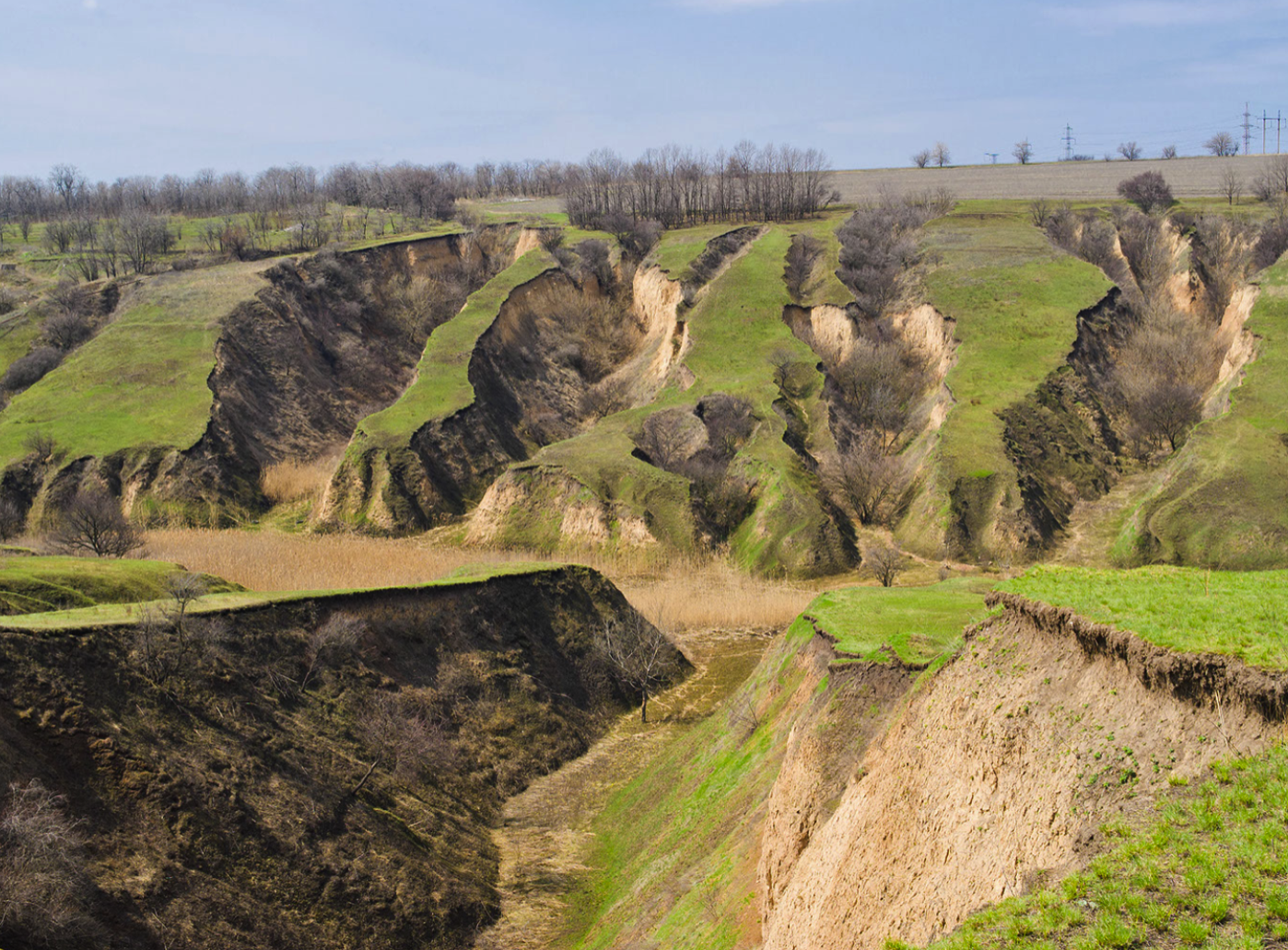
Soil erosion, degradation, and weathering are all headlines that cover screens in many parts of rural America, but are often not understood. The three are sometimes used as synonyms and are not distinguishable to many people who are affected by their occurrence.
Soil erosion is the natural process of the Earth's topsoil detaching due to natural agents, including water, wind, ice, and animals. During this process, soil particles are separated from the soil mass and then spread by wind and water. Human activities such as farming, construction, and deforestation have significantly accelerated this process. Consequently, we are quickly losing fertile land, decreasing agricultural productivity, increasing flooding due to clogged waterways, and damaging aquatic habitats. Soil erosion is also a large contributor to desertification in many arid regions of Africa and Asia.
In contrast, soil weathering is the physical, chemical, and biological processes that break down rocks and minerals into smaller particles. This process is necessary for soil formation as rocks and minerals use chemicals like oxygen and acids to alter their mineral compositions and physical properties, such as thermal expansion, and break down the parent material. This parent material is combined with organic matter, water, and gases to create the diverse mixture that is soil.
Meanwhile, soil degradation refers to the decline in soil quality, which diminishes its ability to support plant growth and other ecosystem services, such as water regulation and climate stability. Soil erosion is just one aspect of soil degradation, as unsustainable land management practices also cause nutrient depletion, salinization, and compaction. Among other things, soil degradation contributes to reduced agricultural productivity, food insecurity, increased risk of floods and landslides, and the advancement of desertification.
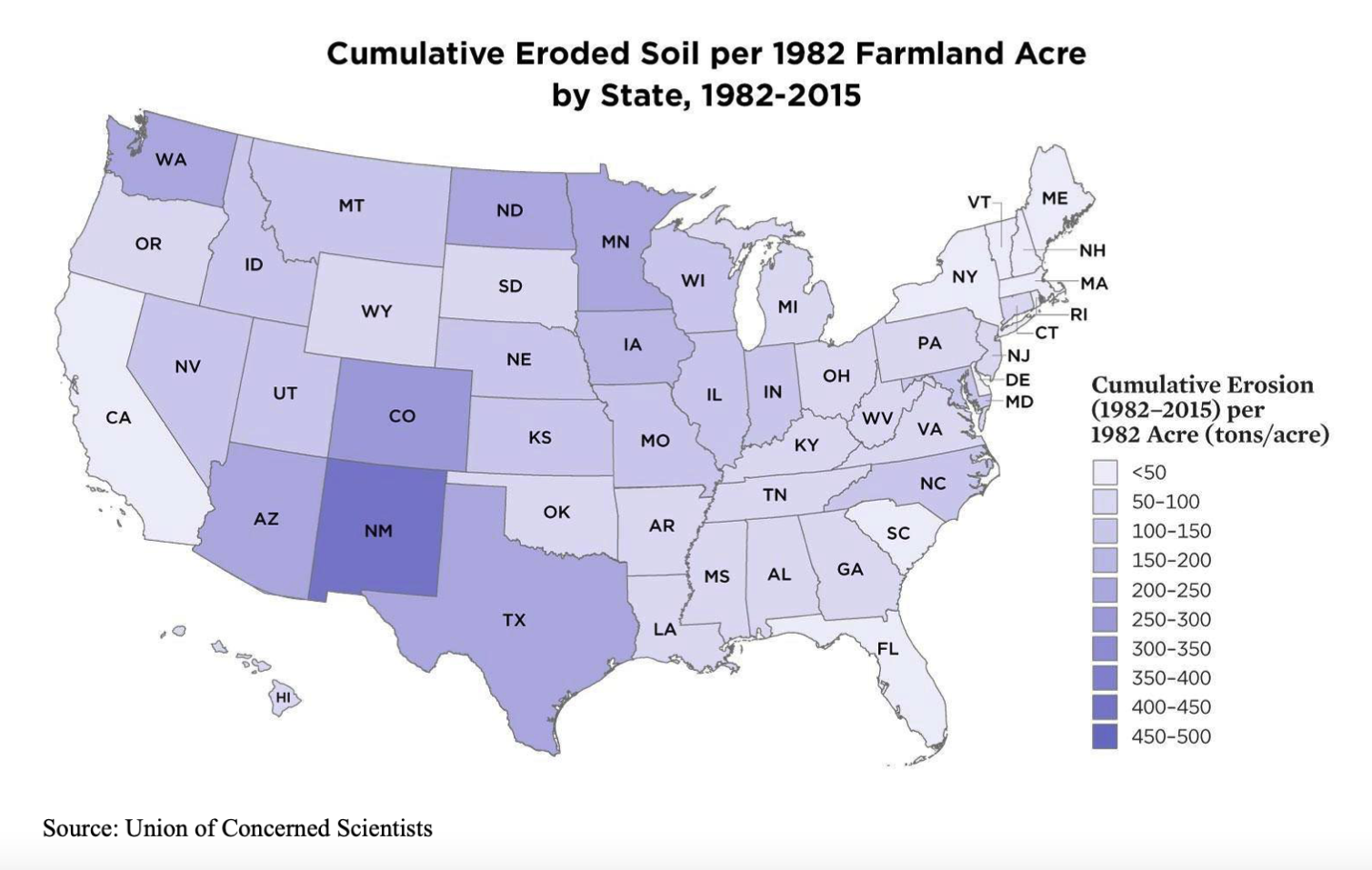
Soil erosion is arguably the largest cause of soil degradation and desertification, as is the physical removal of fertile topsoil, which is essential for plant growth and overall ecosystem health. Erosion directly leads to land loss, nutrient depletion, increased flooding, and water pollution. The fragile, productive soil left across the world is quickly losing its usability to erosion. Once this erosion occurs, it is irreversible and likely to recur. Between 1982 and 2015, an area the size of Ohio (25.8 million acres) of farmland was lost to soil erosion.
In the last 150 years, half of the earth’s topsoil has been lost. This presents significant challenges for agriculture in meeting the needs of the planet’s rapidly booming population. Soil erosion degrades the quality of the soil, resulting in the loss of essential minerals and nutrients that are necessary for plant growth. Without safe soils, our food systems will fall apart, as proven by the Dust Bowl of the 1930s. The Dust Bowl saw widespread food insecurity, bankrupting countless farms and forcing migration from land that was no longer suitable. Healthy soils reduce the amount of nutrients and supplements farmers need to buy, decreasing economic insecurity and allowing smaller farmers to prosper.
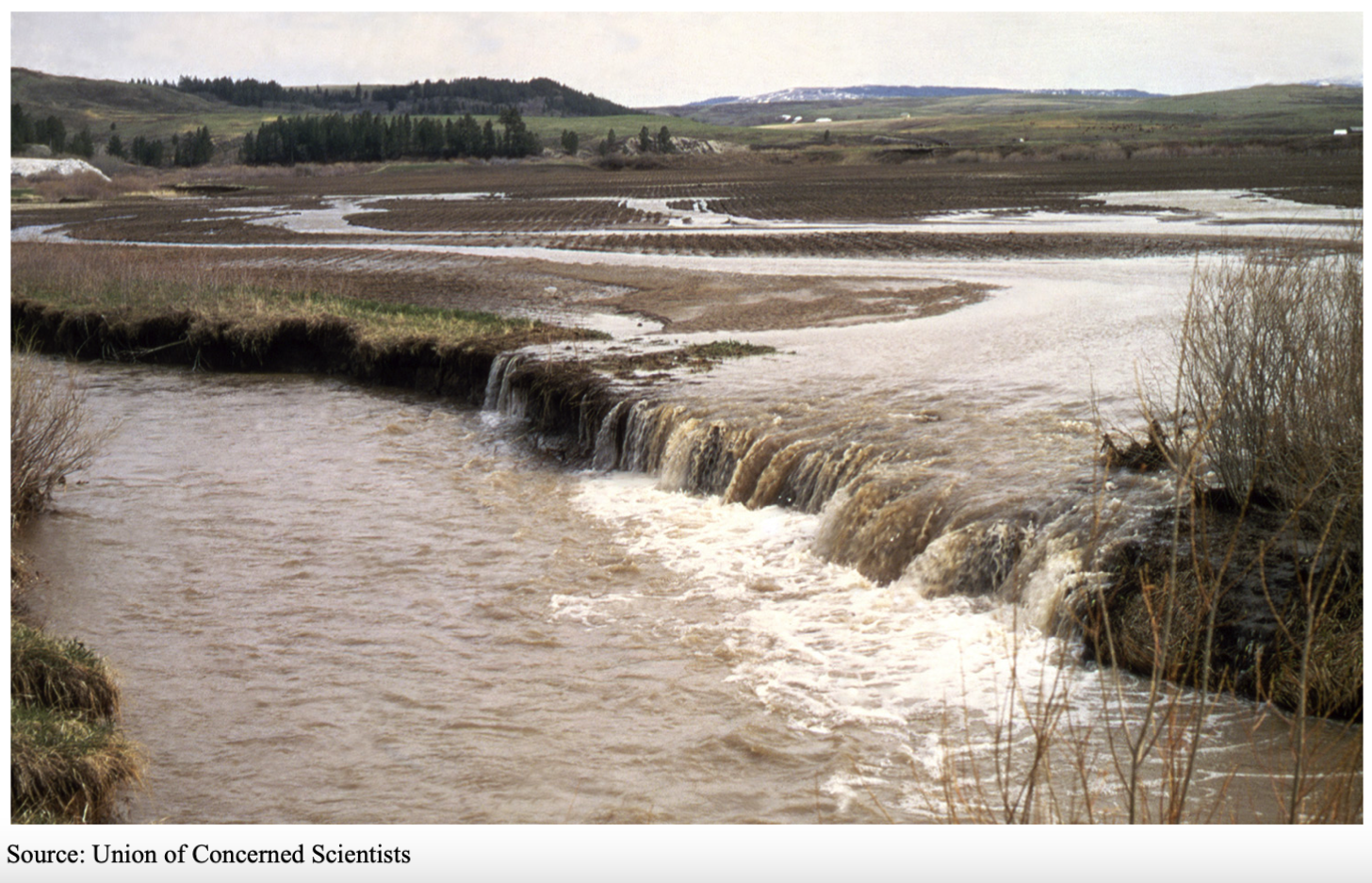
Water systems are particularly impacted by soil erosion. Rivers and streams are clogged, leading to a decline in species diversity. Degraded lands are also less readily able to hold water, which can worsen flooding and impact septic systems. Far downstream, increased runoff means increasing “algae blooms that annually turn huge areas of waterways like the Gulf of Mexico and Chesapeake Bay into ‘dead zones’, seriously damaging fisheries.”
So how can we slow down this growing threat to our lands, food, wildlife, and health? Diversifying crop rotations to build soil fertility and planting cover crops to maximize the soil’s water-holding capacity and keep soil in place enable farmers to make small changes that can be financially beneficial while lessening soil erosion. One of the biggest changes that can help, though, is to reduce (or eliminate altogether) plowing, especially industrial plows that loosen and expose topsoil with every run. Soils can also be covered by mulch and dense vegetation to help stabilize and heal.
Change the Chamber is a nonpartisan coalition of young adults, 100+ student groups across the country, environmental justice and frontline community groups, and other allied organizations. To support our work, donate or join our efforts!