Climate Change’s Threat to Agriculture & Global Food Supply
By Dom Altomari, December 4, 2025
Farmers everywhere are watching once-reliable harvests wither under extreme heat and drought. The science is clear: warming is eating our food supply faster than we can adapt.
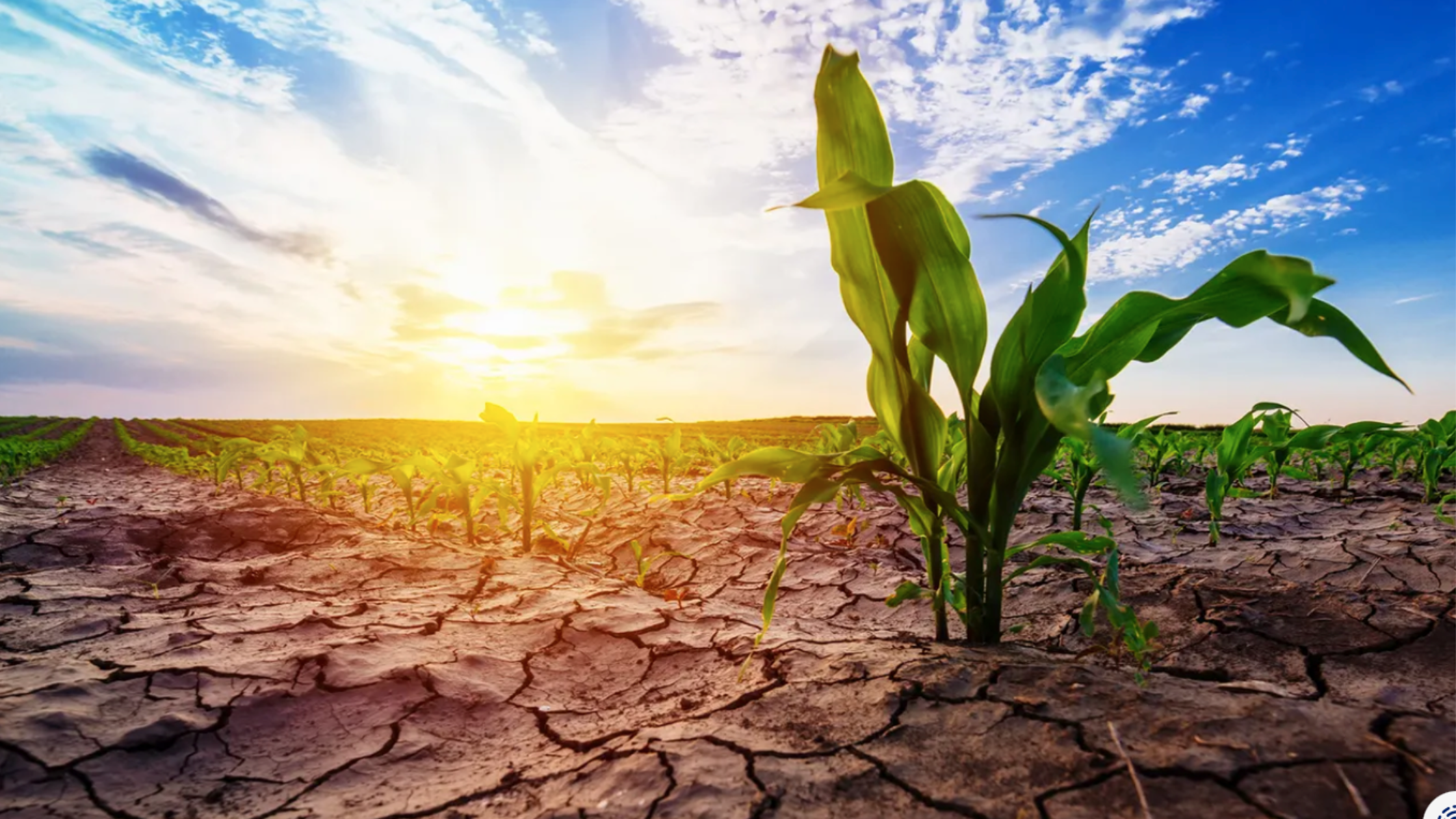
In a sunbaked North Carolina field last year, what had been golden rows of corn for generations were reduced to only dried, brown stubble sparsely stippled across the plain. The region’s corn yield plunged 41 percent from 2023 to 2024 (the steepest one-year drop on record in the state), decimating hundreds of millions of farmers’ incomes and shifting national growing patterns. The culprit behind this collapse has been a trend of relentlessly increasing heat and drought. According to Dr. David DuBois, New Mexico’s state climatologist, “hotter droughts pull moisture from soil faster, slicing yields.” This new compound of conditions is not just confined to U.S. farms but is playing out on a global scale. Scientists predict every additional degree Celsius of warming will deplete major crop harvests by between six and seven percent. Recent studies show that global warming has already decreased barley, maize, and wheat harvests by between four and 13 percent compared to a world without these climate trends. The question is: what happens to our global food security and communities that depend on these systems if we fail to adjust our food systems?
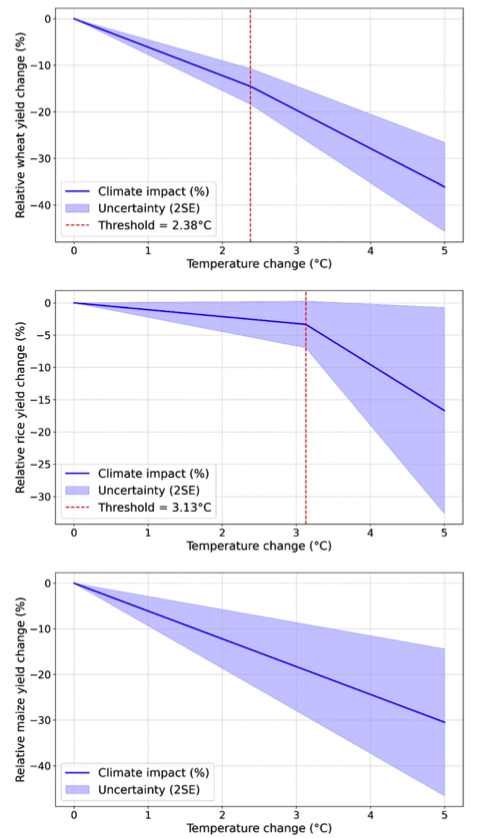
Estimated climate impacts (%) per 1 degree warming for wheat, rice, and maize, respectively. Source: nature.com
Understanding the Science: A Brief Breakdown of Heat and Crops
Like humans, different plants thrive in their own specific “comfort zones” of temperature. For example, wheat grows best between 15 and 20 °C, while corn (maize) prefers a warmer 20 to 30 °C range. Once conditions creep above these temperatures, key processes begin to falter (again, similar to what happens to us as humans). High heat denatures enzymes in leaves and forces stomata to close to conserve water, so photosynthesis and growth plummet. Extreme temperatures accelerate a plant’s life cycle, meaning that plants will rush to flower and seed prematurely, leaving less time to produce the grain. Extreme heat may also cause reproductive failure, depending on where in their life cycle a plant may be. For example, a blistering day during flowering may sterilize pollen or abort young kernels in cereal crops, a loss that destroys the eventual harvest. Heat also heavily drives up water loss as warmer air drives evapotranspiration and drains soils of their moisture. As Dr. David DuBois states, “even if you get one inch of rain, that rain is not going to stick around as long as it would have if it were a little bit cooler.”
In recent decades, every 1 °C rise has translated into multi-percent yield losses for key crops. One review found a 7.4 percent drop in maize yield and a 6.0 percent drop in wheat yield per 1 °C of warming. However, drought amplifies it because crops will wither faster and die sooner under higher temperatures. This interplay of heat and drought has already begun to impact global crop yields in unprecedented ways. Their stresses multiply when heat coincides with dry conditions. Without enough water, plants can’t cool themselves or fuel recovery after heat. The result is dramatic and something you may have seen much more of this past summer: a sun-scorched field with stunted, shriveled plants.
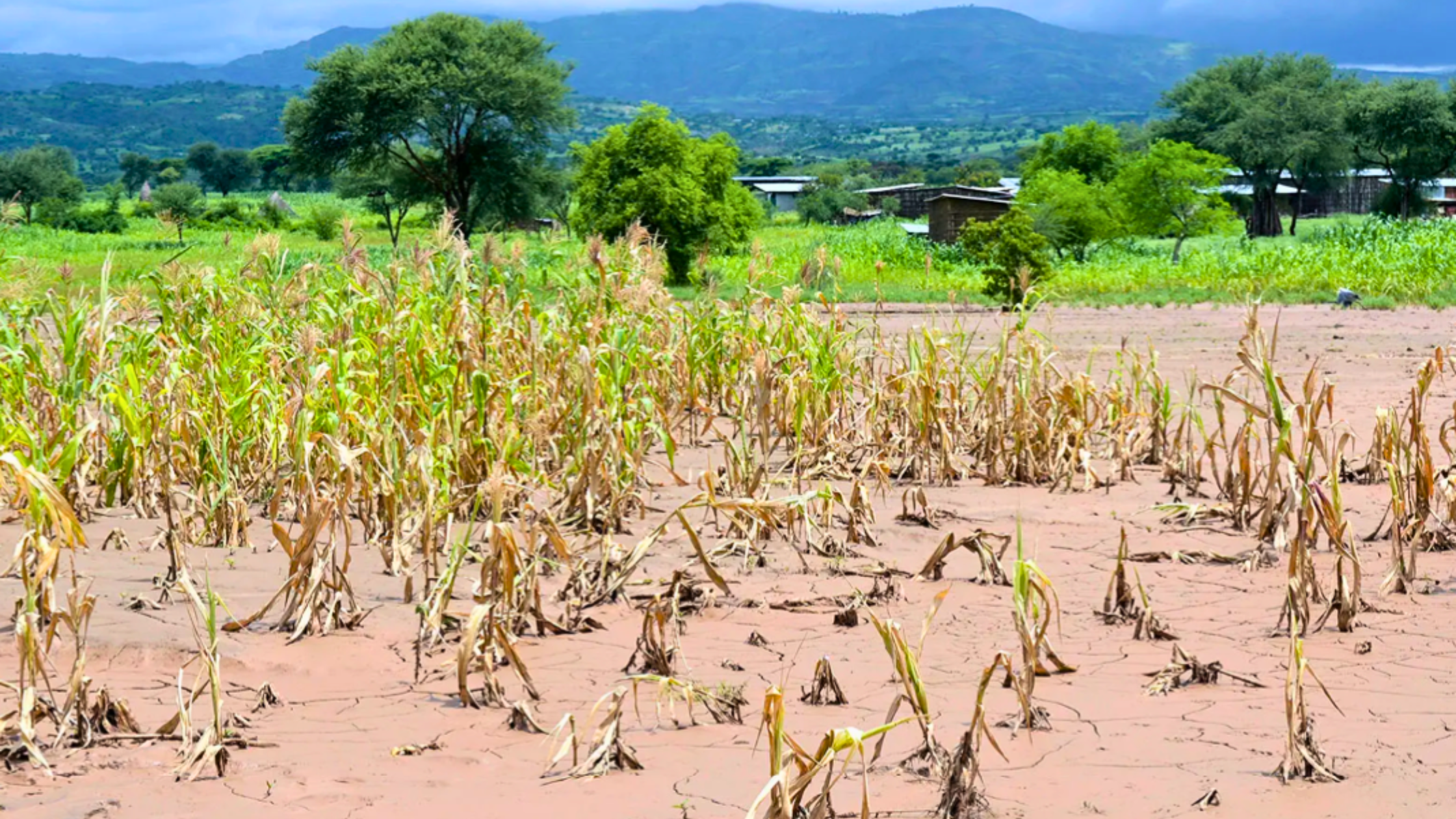
Photo Source: Joerg Boethling / Alamy Stock Photo, Carbon Brief
Impacts On Crop Yields
A recent Stanford analysis published in Proceedings of the National Academy of Sciences (PNAS) found that climate trends (warmer, drier conditions) have already reduced yields of wheat, barley, and maize by roughly four to 13 percent worldwide. A Nature study projects that under high-emissions warming, global calorie yields from staple crops could be ~24 percent lower by 2100 than they would have been without climate change. That study even accounts for how farmers might adapt and still finds every additional 1 °C of warming costs about 120 calories per person per day on average (roughly 4.4 percent of current consumption).
Not all regions will feel these trends equally. The U.S. Corn Belt, once a reliable, flourishing source of fertile soil, will be “hammered” under high warming scenarios, potentially shifting the U.S. Corn Belt north to cooler areas. A Stanford scholar quips that domestic warming will effectively export our crops abroad, making Canada, Russia, and China the major producers while leaving U.S. farmers to get poorer.
This is not a problem confined to our distant future. The 2023 U.S. corn crop broke records nationally, but with huge local swings. A farmdoc analysis of USDA data shows how 2023 yields compare to national trends: Indiana averaged 8.5 percent above its long-term trend, while drought-hit states like Kansas and Minnesota were six to eight percent below trend. In North Carolina, extreme weather flipped from one year to the next, sending corn yields crashing from 147 to 87 bushels/acre (a 41 percent drop) because a June drought was followed by hurricane rains.
On the global stage, yields in Asia and Africa are similarly rolling downhill due to bizarre weather trends. In South Asia, recent heatwaves have devastated wheat and rice. India’s record-breaking heatwave between March and April 2022 (with 62-71 percent below normal rainfall) led to a 10-35 percent decrease in wheat harvests in key northern states. Farmers in the Indo-Gangetic plain watched reliable staple crops shrivel under an unprecedented 122-year heat. In Sub-Saharan Africa, maize (which provides roughly 50 percent of calories in southern and eastern Africa) faces steep losses. Models show that 2 °C of warming could shrink yields of maize, sorghum, millet, and wheat by 5-10 percent, and 4 °C by around 20 percent in vulnerable zones. In South America, cocoa and coffee crops are under threat. The Ivory Coast and Ghana, which account for 50 percent of global cocoa production, as well as neighbouring Cameroon and Nigeria, saw a six-week longer period of temperatures exceeding 32 °C in 2024 compared with 2023, which resulted in severe production losses due to impaired photosynthesis in the cocoa trees and failure of bearing fruit.
Across the planet, two inequities stand out. First, regions with less financial means suffer most: The World Bank notes that about 80 percent of people most at risk from climate-driven crop failures live in South/Southeast Asia and Sub-Saharan Africa. Second, those hit hardest are often least responsible for global warming. Many African and South Asian farmers have contributed only a tiny fraction of historical emissions, yet they reap a disproportionate share of climate impacts.
Beyond Just Heat, Climate Change Extremes Compound
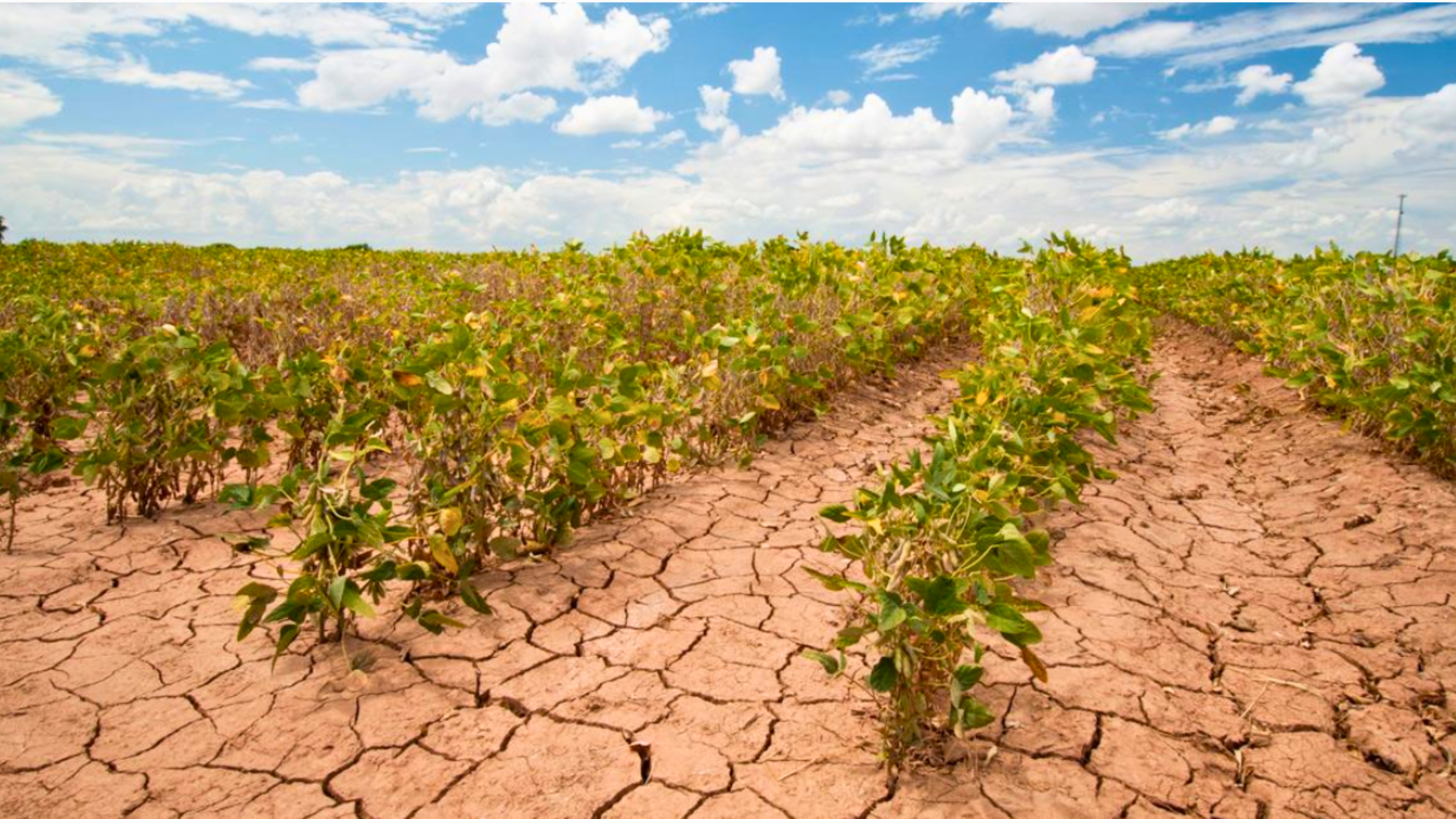
In this 2013 photo, soybeans show the effect of drought near Navasota, TX. Photo: Bob Nichols, USDA/CC BY 2.0 (Flickr), Union of Concerned Scientists
Heat alone is devastating; add in other climate threats, and the problem compounds. Crops now face an onslaught of extremes from floods to pests that intensify losses. As one North Carolina reporter put it, farmers are “grappling with flash floods, record heat and sudden freezes that can erase months of hard work.” Cycles of drought, flash flooding, and unusual cold snaps are creating a unique climate whiplash threatening modern farming as we know it. The largest climate stressors that pose a serious threat to modern food systems include:
Floods & Hurricanes: Intense downpours and storms can drown fields and wash away topsoil. FAO data shows that floods (including cyclones) caused about $21 billion in crop and livestock losses globally (in low/middle-income countries from 2008-2018). Heavy rain can sink or rot entire harvests. In the U.S., coastal hurricanes have, in recent years, inundated tens of thousands of acres overnight.
Droughts & Wildfires: Climate change leads to worsened flooding events and droughts, both of which reduce the soil’s ability to absorb water effectively. As temperatures rise, extreme heat dries the ground, further exacerbating droughts. In the Global South, droughts are the biggest trigger of agricultural losses, accounting for roughly 34 percent of crop/livestock losses (2008 - 2018). When rains fail, heat exacts a double penalty: plants already weakened by water stress heat up even faster, accelerating damage. The current “megadrought” in the U.S. Southwest, which has been named the worst in 1,200 years by some measures, is partly fueled by higher evaporation due to warming. Likewise, wildfires, strengthened by heat and drought, scorch the edges of farmland, killing seedlings, claiming homes, and baking soil.
Late Frosts: Paradoxically, a warming climate can also shift weather patterns to bring cold snaps or late frosts that kill sensitive crops. A late spring freeze can destroy budding fruit or grain shoots that grew too quickly after a mild winter.
Pests & Diseases: Warmth and humidity can breed pest outbreaks. For example, a historic desert locust plague in 2020 was fueled by abnormally wet weather following a drought, also worsened by climate change, that devastated maize, sorghum, and millet fields across East Africa. FAO data shows biological shocks (which include various pests and diseases) already account for around nine percent of crop losses. With milder winters and hotter summers, pests are spreading into new regions.
Soil Degradation: Erratic rainstorms erode topsoil while droughts and heat bake away essential moisture. Across regions, fertile topsoil has been lost or degraded. Over time, land that once grew food has become too nutrient-poor to sustain crops. Meanwhile, higher amounts of carbon dioxide in a hot world dilute crop nutrition. Studies have found rice grown under elevated CO₂ (as expected in the future climate) has significantly less protein, iron, and zinc.
In effect, every accompanying climate shock serves as a multiplier of heat stress, resulting in a downward spiral of yield volatility.
Adaptation and Mitigation Efforts
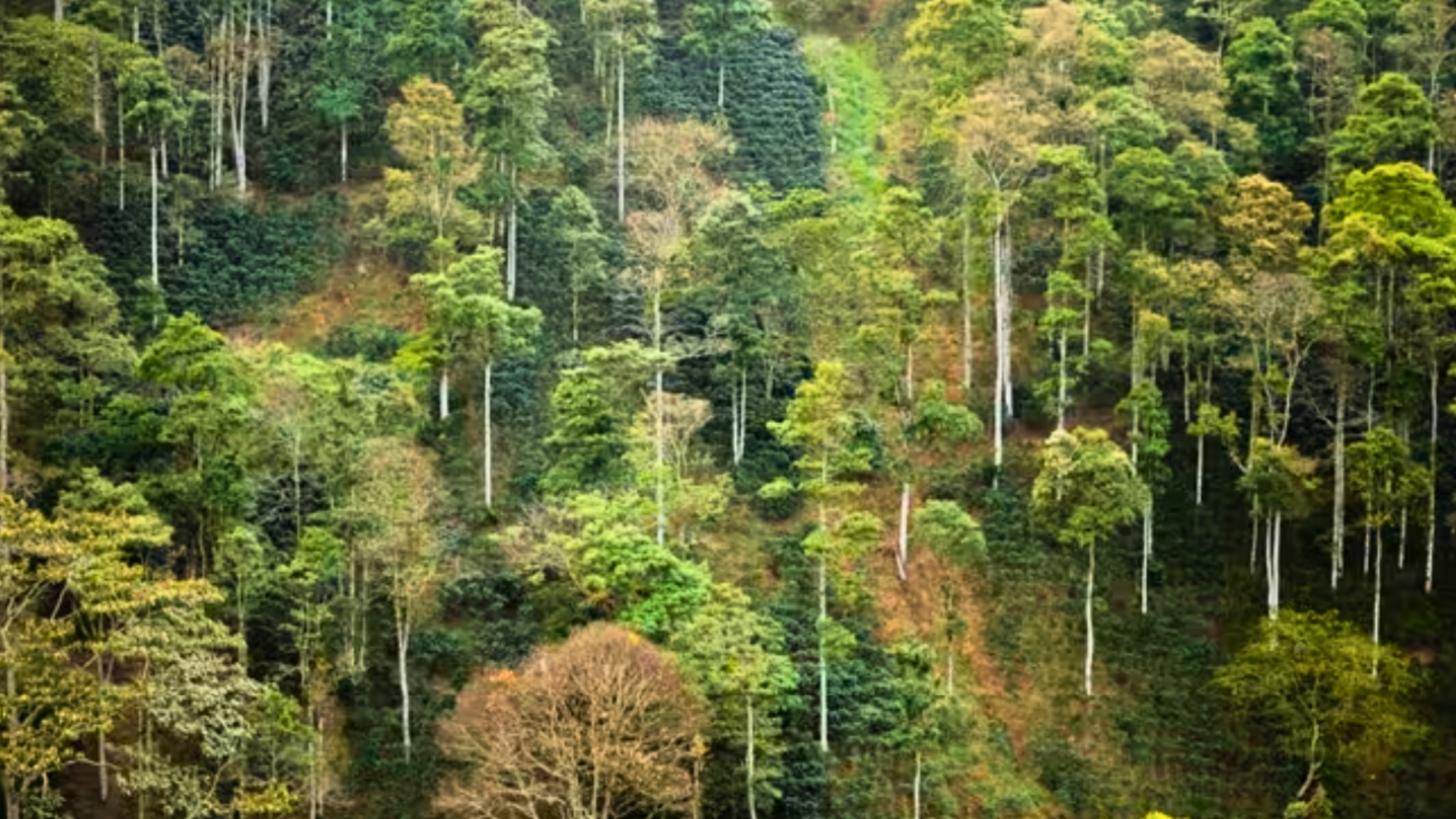
On this farm near Andes in Antioquia, Colombia, coffee trees grow beneath a layer of canopy trees in a shade-grown coffee plantation. Photograph by Guillermo Santos, source.
Farmers and scientists are adopting climate-smart practices, such as developing crop varieties that can endure heat and scarce water in response to the rising threat of climate change. Researchers are cross-breeding and using gene-editing to create corn, wheat, and rice that set grain at higher temperatures. In a pilot project by the Indian Council of Agricultural Research’s Indian Institute of Rice Research (ICAR-IARI), new climate-resilient wheat boosted yields, proving that it could withstand the increasing challenges posed by global warming. Farmers are dodging peak heat by shifting planting dates as another climate change adaptation strategy. Moving sowing earlier or later allows the crops to mature before the hottest part of summer, increasing yield. California’s vineyards have faced the highest and driest temperatures in history, forcing growers to adapt new methods such as delaying pruning to allow vines to bloom later, avoiding spring frosts made more erratic by climate change.
In some areas of the world, farmers are switching to faster-maturing or more heat-adapted crops altogether (for example, planting sorghum or pearl millet instead of maize in dry zones). Integrating trees, shrubs, or shade crops on farms can cool the surrounding air and soil. Vulnerable crops in hotter climates, such as coffee and cacao, have been found to thrive under forest canopy, reducing daytime heat stress. New agroforestry projects are testing shade canopies or intercropping to protect vegetables and fruits from scorching sun. Such “green umbrellas” can lower field temperatures by several degrees, conserve water, and help provide nutrients, saving harvests on hot days. Improved land practices, such as the use of cover crops, rotational grazing, and low tillage, can also conserve moisture. In arid regions, farmers build small water catchments (“zai pits” in the Sahel) to harvest scarce rain. Micro-irrigation and drip systems apply water only to roots, stretching limited water supplies. In Niger, a World Bank-supported program is distributing drought-tolerant millet and sorghum seeds and training farmers in water-harvesting techniques across 44 communes.
Beyond growing techniques, technology is expanding and improving, prominently becoming a key player in preserving crop harvests. Governments and NGOs are expanding agro-meteorological networks that deliver timely climate advisories. Mobile apps can now warn farmers of upcoming heatwaves, late rains, or pest outbreaks in minutes, but access to that information is largely correlated with wealth. Heatwave “action plans” (as used in Ahmedabad, India) send alerts when temperatures cross danger thresholds. Better weather forecasts allow a farmer to plant before a forecasted dry spell or rush-harvest before a predicted storm.
Meanwhile, international agencies and governments are pushing for climate-smart agriculture (CSA) programs as practices that enhance yields, adapt farming to climate stress, and reduce emissions. CSA includes using climate-resilient crop strains, precision farming, improved irrigation, crop rotation, and agroforestry. New experiments in conservation agriculture practices (like alternating row cropping or cover cropping) aim to lock carbon in soil and boost crop resilience. On the tech front, satellites and drones can help monitor crop health, natural cycles, and disasters. Several studies, including those done by The World Bank and the National Institute of Health, also highlight weather-indexed crop insurance as a vital adaptation for millions of farmers in South Asia and India.
Adaptation, while exciting, is not fully protective. Switching crops could very well help one season, but has the potential to backfire if conditions shift again. Shifting planting dates may conflict with unpredictable rains. Adaptation requires investment, and unfortunately, smallholder farmers (70 percent of all farms globally) often lack capital or credit to even buy new seeds, sensors, or insurance.
To truly safeguard the future of food, adaptation must be paired with aggressive mitigation (slashing greenhouse gas output). Without tackling the root cause, efforts will always be a few steps behind the intensifying heat and unpredictable weather phenomena.
What’s At Stake
As crop yields decline and the global population continues to grow, the world teeters on the edge of hunger and instability, with climate change exacerbating the drivers for hunger. Every 1 °C increase in warming saps 120 calories per person per day from global food availability, while over 800 million people worldwide already lack access to reliable food. Solomon Hsiang of Stanford bluntly warns that a 3 °C warmer world is “basically like everyone on the planet giving up breakfast.” Even a 10 percent drop in yield could push billions into chronic undernourishment. Humanitarian agencies warn that due to several compounding factors, including rising food prices, climate change, and conflict, communities reliant on staples could face widespread hunger.
Because crops are traded globally, harvest shortfalls anywhere send shockwaves throughout the world. We saw a preview when back-to-back climate disasters in 2021 and 2022 catalyzed a global food crisis. As global warming progresses, such shocks will become more common, be it a summer drought in Argentina, a flood in Indonesia’s rice belt, or a late frost in France. Low-income farmers will see incomes collapse, and countries that depend on agricultural exports could lose billions. 1 degree Celsius of warming has already cost Tanzania 20 percent of its export earnings over the past 40 years. On global markets, food price spikes can fuel inflation and even lead to geopolitical tensions (think of past crop riots or export bans). Climate change won’t just squeeze yields; it will also strain our economies and wallets.
The backbone of many rural communities lies in smallholder farmers. Each failed harvest can push a family deep into debt, with no relief in sight. In places with minimal savings, a repeat of back-to-back crop failures can force a desperate choice-migration. When fields flood or parch and no help arrives, many farmers “resort to hitting the road and becoming climate shock-related refugees.” These are often internal displacements, such as entire villages uprooted, but could extend to entire coastal communities. That means empty, abandoned farms with nutrient-depleted soil and ghost towns, as well as social strain in the places they flee to.
Down the road, widespread food shortages could trigger waves of migration and conflict. History shows that resource scarcity often drives people to migrate or fight over available resources. We’ve already seen climate-linked migrations (e.g., Sahelian droughts pushing people into cities). If crops fail across continents, we can be sure to expect increased cross-border tensions. From competing for clean, fresh water to nationalistic bans on food exports, experts caution that in a destabilized climate future, food could become as contentious an issue as energy or water.
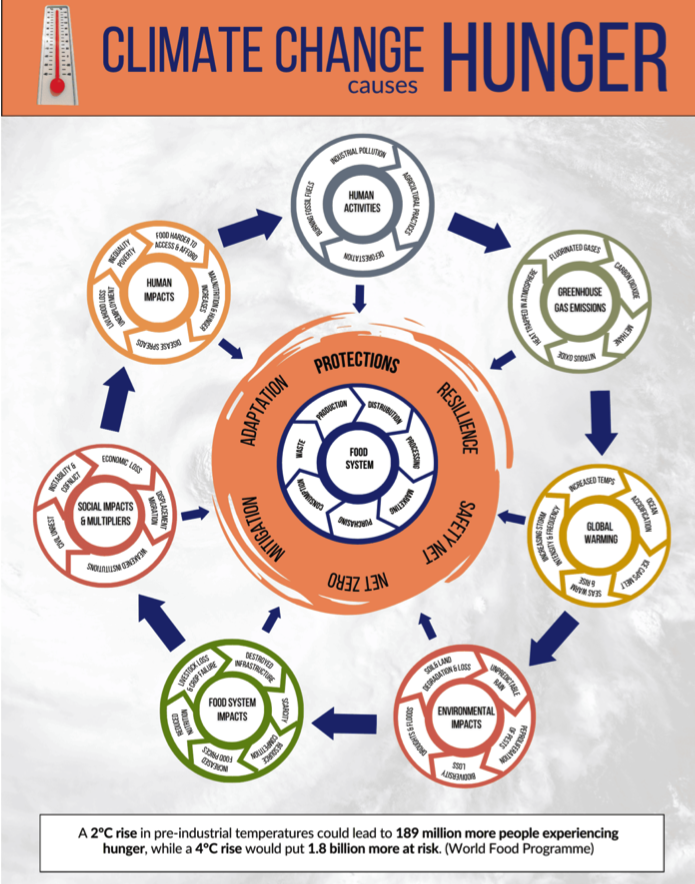
Photo Source: World Hunger Education Service
In Closing
The science is settled and the evidence is undeniable: rising heat is actively eating away at our global food supply. Cornfields are wilting, wheatheads are aborting, and rice paddies are drying up while billions across the world face hunger. Without immediate action, each passing season will bring more barren fields, higher food prices, and deepening global insecurity.
The time to act is now. Policymakers and citizens must demand investments in adaptation–from heat-tolerant seeds to weather insurance and better irrigation, while also taking bold steps toward climate mitigation by drastically cutting emissions and transitioning to a net-zero future. Our farmers need support, not abandonment. It’s about time to start treating climate-smart farming as a development priority. This fight is about more than just yields; it’s about the right of future generations to nutritious food security.
Take Action
Public advocacy has proven time and time again to be our most critical line of defense. Here are ways that you can help:
Sign on to Action Network’s petition demanding the U.S. Congress "pass legislation and provide funding to support a sustainable and regenerative agriculture industry."
Add your name to Global Citizen’s Open Letter to global decision-makers to invest in “sustainable agriculture and climate-smart solutions that reduce dependence on food imports, boost local economies, and ensure nutritious food for all.”
Sign Action Network’s open letter to the leaders of Brazil and Honduras to create an adaptation plan for agricultural practices in the face of climate change.
Check out the California chapter of the Sierra Club’s resource with suggested actions to show support for the development of sustainable ag practices!
Change the Chamber is a nonpartisan coalition of young adults, 100+ student groups across the country, environmental justice and frontline community groups, and other allied organizations. To support our work, donate or join our efforts!